2026-08-17 · David Ellis
What Causes Leaks at Roof Valleys in Conroe Houses
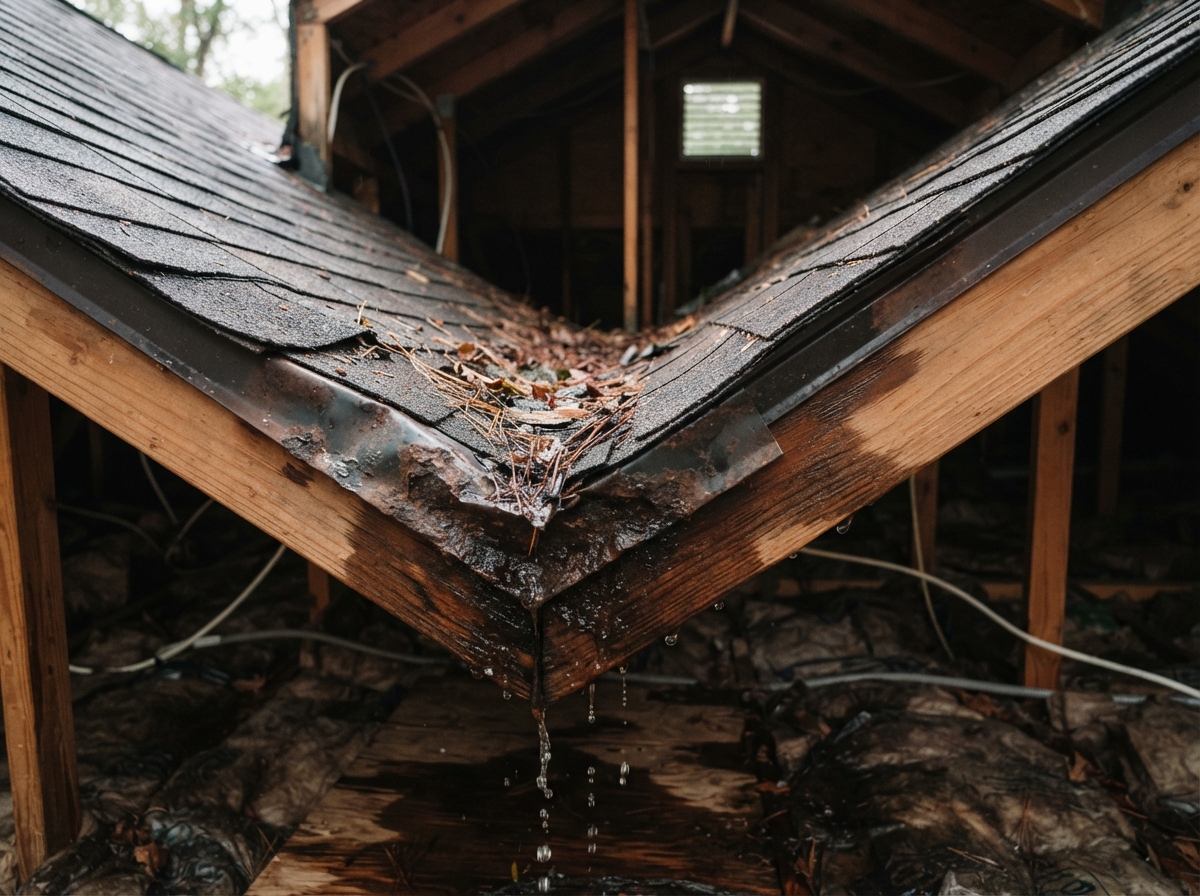
Roof valleys leak in Conroe houses when flashing cracks or pulls away and water pools in the low spots during storms. Heat from hot summers expands materials while humidity keeps wood wet, so the joint fails faster than flat roof sections.
Why do valleys collect water faster than other roof areas?
Valleys sit where two roof planes meet and form a natural channel. In Montgomery County homes, runoff from both sides meets here during summer downpours. Debris like pine needles from Lake Conroe trees builds up and slows drainage. Once water sits against the flashing for days, it finds every small gap. Mild winters do not freeze the water but let constant moisture rot the underlayment underneath. Skip the big-box sealant on these joints because it peels off in the first heat wave and traps more dirt.
How does Conroe weather affect valley flashing?
Humid subtropical conditions with hot summers and mild winters cycle the roof through expansion and contraction every day. Metal flashing moves more than shingles, so nails back out after 8 to 12 years. Grand Central Park homes built in the last 20 years often show lifted flashing along valleys after repeated 90-degree days. Downtown Conroe older stock has the same issue plus settled framing that tilts the valley angle. The constant moisture also grows moss along the seam, which holds water even longer.
What flashing problems show up most in local houses?
Common failures include nails backing out, sealant drying out, and step flashing not overlapping enough. In April Sound and around Conroe Lake, wind-driven rain pushes water under the edge of the flashing. Homeowners also see valleys where previous repairs used the wrong pitch or mismatched metals that corrode. These spots leak first during the next heavy rain because water has no other path. Roof valley leak repair fixes the flashing and underlayment at the same time so the joint lasts another 15 to 20 years.
What it costs to fix valley leaks
Most valley repairs run $650 to $1,400 depending on access and how far the water traveled. If only the flashing needs replacement on a single valley, the job stays on the lower end. When rot reaches the decking or ceiling, costs move to $1,800 to $2,800. These numbers cover labor and materials for a standard Conroe roof pitch. Permits in Montgomery County add $75 to $150 if the repair exceeds certain square footage. Check your insurance for wind or hail riders before the work starts.
When to DIY vs when to call
You can clear loose debris from the valley with a soft brush on a calm day if the roof is one story and you have safe footing. Replace a single popped nail with a new roofing nail and dab of sealant rated for metal. Stop there. Once water has stained the ceiling or you see daylight through the flashing, the underlayment is wet and needs full replacement. That work requires removing shingles, installing new felt or synthetic underlayment, and matching the step flashing correctly. Call for 24 Hour Roof Leak Repair if the leak is active or you are unsure about the pitch. Average Cost of Roof Leak Repair in Conroe TX gives more local ranges.
If you see staining along a valley in Conroe, stop by 1030 Outpost Dr or call during our Mon-Sat 7am-7pm hours.